


 zajezdnia
 ogród doświadczeń
 hangar czyżyny


Reaction time
Reaction time
HOW
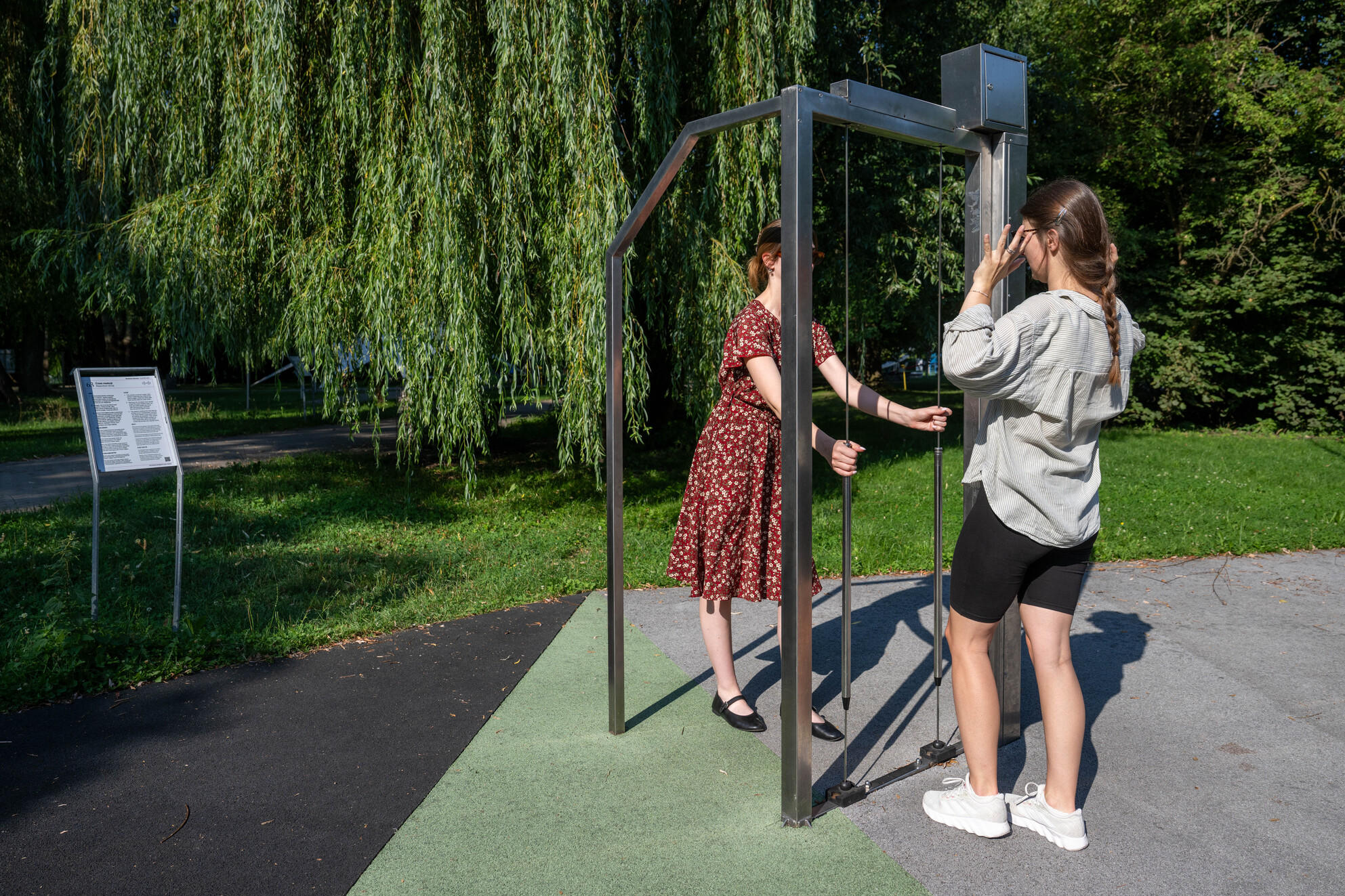
- This activity is done in pairs. One person holds the two rods at the same height, while the other gets their hands ready to catch them.
- Warning: do not place your hads under the rods. Position them so that your little fingers are lever with the boundary between the rod and its black cover
- The person holding the rods lets go of them at an unexpected moment. The other person must catch them as quickly as possible. Then check where the little fingers ended up. The closer they are to the black cover, the shorter the reaction time.
WHY
When the rods are released, they begin to fall under the influence of gravity. The catching person must first notice the movement, then the brain processes this information and sends a signal to the hand muscles. Only then do the hands close around the rods.
This whole process takes a very short time, but it is not instantaneous. This interval is called reaction time.
A good human reaction time is about 0.2 seconds. In that times, a freely falling rod moves downward by about 20 centimetres. The reaction time of the left and right hand may differ, so each hand may catch the rod at a different point.
FUN FACTS
The average human reaction time is about 0.2 – 0.25 seconds. In athletes, it can be shorter, reaching about 0.15 seconds.
Reaction time is affected by factors such as fatigue, stress, illness, and age. It can be improved through practice, training, and maintaining good physical condition.