


 zajezdnia
 ogród doświadczeń
 hangar czyżyny


Spiral
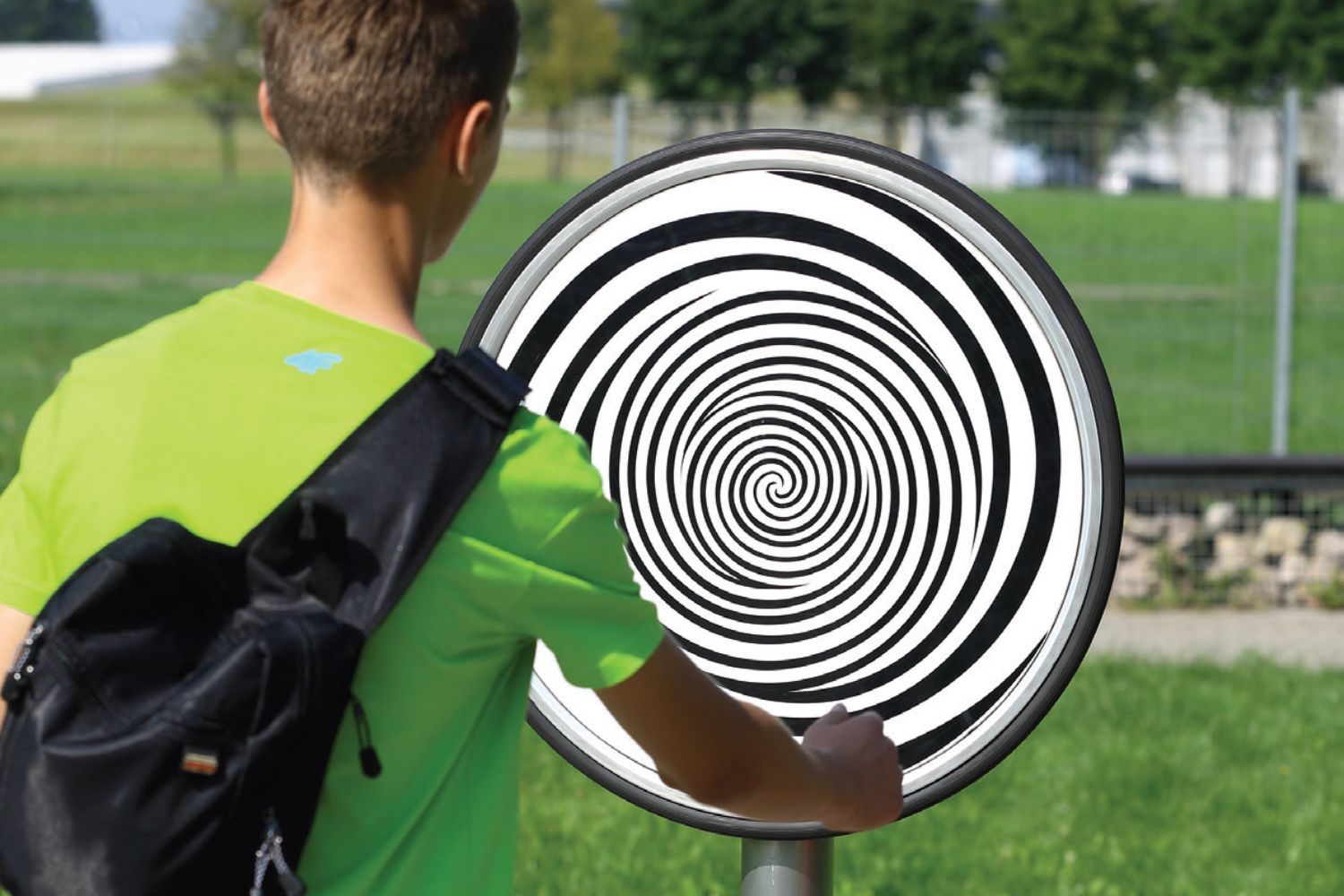
Spiral
HOW
1. Look at the pattern on the stationary disc.
2. Rotate the disc at different speeds in both directions.
3. Observe the spinning disc for 30 seconds.
4. Then look under your feet.
WHY
The spinning disc gives the impression of a spiral moving closer or further away,
depending on the direction of rotation.
When you move your eyes to a stationary object, you experience the sensation of it rippling. Lines of different thickness create a spatial effect. Gazing at the disc creates the so-called waterfall illusion.
Identifying the direction of movement is performed by two types of brain cells – each responsible for one direction. When you observe movement in a particular direction, one of them sends a strong signal to the brain.
The balance of signals arriving from both types of cells indicates a lack of movement. When, on the other hand, one of the signals prevails for a long time, even after it has stopped, the brain takes a while to regain balance. A signal from the second type of cell must reach it – its ‘processing’ will signal a lack of movement.